

A restaurant conversation is a chain of small decisions: choose a dish, ask about it, request a change, select a drink, confirm what the server understood, and close the meal. Practicing only “I’d like…” prepares the first link and leaves the rest to chance.
1. Map the restaurant event before you speak
The event
You want the grilled chicken sandwich with two changes.
The sandwich normally comes with a spicy sauce and fries. You want the sauce on the side and a salad instead of fries. The server asks which dressing you want and whether you would like still or sparkling water.
- Main item
- Grilled chicken sandwich
- Modification 1
- Spicy sauce on the side
- Modification 2
- Salad instead of fries
- Follow-ups
- Dressing and water
Draw a five-stop service map
Complete all five stops in the first practice run. You can add dessert or the bill later; first make the core order reliable.

2. Practice sentence patterns with movable parts
Keep the structure and replace the food. This builds a reusable request instead of a restaurant-specific speech.
| Communication job | Pattern | Change the slots |
|---|---|---|
| Ask about a dish | “Does the ___ come with ___?” | sandwich / fries; curry / rice |
| Remove an item | “Could I have it without ___?” | onions; cheese; sauce |
| Replace a side | “Could I get ___ instead of ___?” | salad / fries; rice / bread |
| Move an item | “Could you put the ___ on the side?” | dressing; sauce |
| Confirm | “So that’s ___ with ___, correct?” | item / modifications |
Substitute nouns only
Say “Could I get salad instead of fries?” Then replace both nouns: vegetables instead of rice; fruit instead of toast.
Change the request type
Keep the food but switch between without, on the side, and instead of. Notice that each creates a different result.
Add the server’s follow-up
After every request, answer one choice question: dressing, cooking level, side, size, or drink.
3. Complete the service sequence
Attempt the event before comparing your conversation with this illustrative model.
Are you ready to order, or would you like another minute?
I’m ready. Does the grilled chicken sandwich come with the spicy sauce already on it?
Yes, but we can put it on the side.
Great. I’d like the chicken sandwich with the sauce on the side. Could I get a salad instead of fries?
Of course. Which dressing would you like: ranch, balsamic, or lemon?
Lemon, please. And I’ll have sparkling water.
So that’s one chicken sandwich, sauce on the side, salad with lemon dressing, and sparkling water.
That’s right. Thank you.
Practice short answers that remain specific
| Server asks | Weak reply | Specific reply |
|---|---|---|
| “Which dressing?” | “That one.” | “The lemon dressing, please.” |
| “Still or sparkling?” | “Yes.” | “Sparkling water, please.” |
| “Is the sauce on the side?” | “Okay.” | “Yes, on the side.” |
Short answers are natural, but they still need the word that resolves the choice. Practice repeating the chosen option instead of relying on yes, okay, or pointing.
4. Review language by function
After the first run, sort what happened into five functions. Save one useful pattern from the function that caused the most trouble.
Did you learn what the dish includes?
Was the main item unambiguous?
Did without, instead of, or on the side produce the intended change?
Did you answer the exact choice the server offered?
Did you notice and correct any mismatch in the final read-back?
Use final confirmation as a listening test
Ask the practice partner to read back one detail incorrectly. Listen for the mismatch:
“Chicken sandwich with fries and lemon dressing.”
“Almost—the salad is instead of fries, and the lemon dressing is for the salad.”
5. Repeat with new constraints
The requested side is unavailable
Choose between two alternatives and confirm whether either costs extra.
You are sharing the meal
Ask for an extra plate, decide whether to split the dish, and confirm serving order.
The order arrives incorrectly
State the expected detail, contrast what arrived, and request a correction without restarting the entire order.
A 14-minute restaurant session
- Two minutes: memorize the item and two modifications, then hide the note.
- Four minutes: complete question, order, modification, follow-up, and confirmation.
- Three minutes: review one pattern and one missed choice.
- Three minutes: repeat with an unavailable side or incorrect read-back.
- Two minutes: ask for the bill and confirm payment instructions.
Language practice can prepare your questions, but it cannot verify ingredients or kitchen procedures. For a serious allergy, communicate directly with trained restaurant staff, use an accurate allergy card where appropriate, and follow medical guidance.
Ready to order?
Check the complete interaction.
- I can ask what a dish comes with.
- I can distinguish without, on the side, and instead of.
- I can answer a follow-up with the exact selected option.
- I can listen to the server’s read-back and correct one mismatch.
- I can change the food while keeping the sentence pattern.
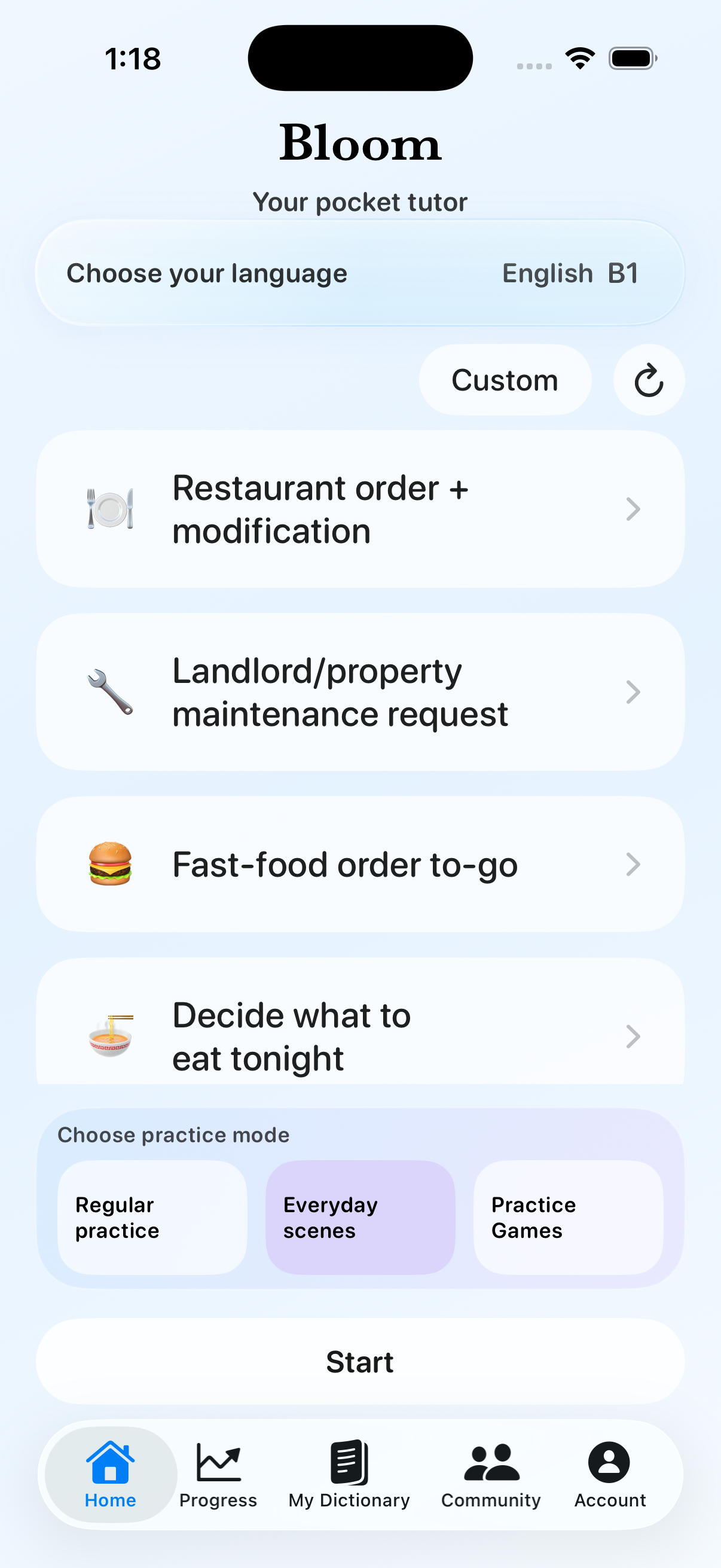
Use the real Bloom scene
Open “Restaurant order + modification” and make the details yours.
Replace the food, side, sauce, and follow-up choice on every run.